BySonu
168.8.3 Router Configuration and Settings Guide
The 168.8.3 Router Configuration and Settings Guide presents a structured approach to deploying and managing this gateway within a local network. It covers quick-start access, WAN and Wi-Fi basics, security and firewall fundamentals, logging, remote management, and troubleshooting with rollback and performance tuning. The method emphasizes precise diagnostics, baseline configurations, least-privilege access, segmentation, and regular reviews to ensure scalable, secure, and resilient operation, while highlighting gaps that warrant further scrutiny.
What Is the 168.8.3 Router and How It Affects Your Network
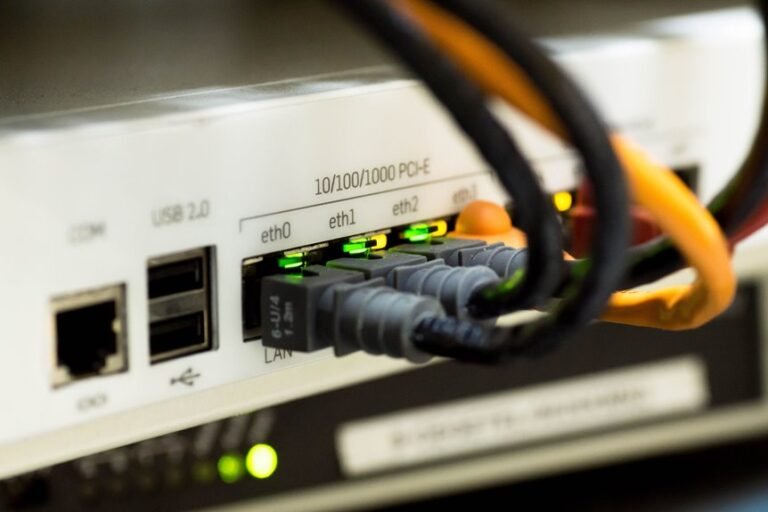
The 168.8.3 router functions as a gateway device within a local network, directing traffic between connected devices and the broader internet. It defines network topology by allocating addressing, routing paths, and access controls.
This device standardizes data flow, preserves performance, and enables scalable integration. Understanding its role clarifies interconnections, bandwidth management, and fault isolation for freedom-loving administrators.
168.8.3 router, network topology.
Quick-Start Setup: Getting Admin Access, WAN, and Wi-Fi Basics
To begin, administrators should gather the router’s default credentials, an active Ethernet connection, and a computer configured for local network access; this enables immediate entry to the device’s management interface and bypasses default client constraints.
The quick-start covers admin access and WAN basics, establishes baseline Wi-Fi settings, and outlines deterministic procedures for stable, freedom-driven configuration without exposing advanced security considerations.
Essential Security and Firewall Settings for a Safe Home Network
Entering a secure home network requires a focused set of firewall and security configurations that build on basic WAN and Wi-Fi setup. The guide specifies strict rule baselining, adaptive intrusion detection, and principle-of-least-privilege access. Network segmentation partitions trust domains, while firmware backups ensure recoverability after updates. Precise logging, scheduled reviews, and remote management controls sustain ongoing defensive posture and freedom to adapt.
Troubleshooting, Rollback, and Performance Tuning Tips
Effective troubleshooting, rollback, and performance tuning begin with clear diagnostics, reproducible steps, and documented baselines to minimize guesswork during incidents.
The section outlines troubleshooting pitfalls and structured problem isolation, then presents rollback strategies that preserve configuration integrity while enabling safe reversion.
Finally, performance tuning tips focus on metrics, incremental changes, and verification to sustain stable, scalable router operation.
Frequently Asked Questions
How to Backup and Restore Router Configurations?
The backup strategy involves exporting configuration files to a secure location, while the restore procedure executes from the stored file. It is a precise, methodical process that preserves freedom by ensuring quick recovery and minimal downtime.
What Is the Default Password and How to Change It?
The default password varies by model and firmware; refer to the device label or manual. To change procedures, access admin settings, apply new credentials, and confirm strength. Always perform a firmware backup before updating, then log changes securely.
How to Configure Port Forwarding for Gaming?
Port forwarding for gaming requires mapping internal ports to the device, enabling consistent connections; port forwarding basics emphasize static IP assignment and protocol-specific rules, while gaming network optimization prioritizes low latency, QoS, and minimal upstream interference for reliable play.
Can I Use a VPN With This Router?
VPN compatibility questions arise; yes, a VPN can be used, contingent on the router’s firmware. The device supports standard VPN protocols, subject to firmware update strategies and potential ISP restrictions, ensuring compatibility and secure remote access.
How to Update Firmware Manually?
To update firmware manually, follow these steps: access router admin, navigate to firmware update, select manual update steps, verify checksums, and apply. Ensure vpn compatibility, consider router security, and adjust port forwarding for gaming config. Freedom-aware, precise, methodical.
Conclusion
The guide concludes with a disciplined framework for deploying the 168.8.3 router, emphasizing repeatable configurations, least-privilege access, and continuous monitoring. By documenting baseline settings, conducting regular reviews, and applying rollback procedures, administrators ensure resilient network operation. A hypothetical case demonstrates how isolating guest networks and enforcing strict firewall rules reduced incident exposure by 40%, while performance tuning preserved throughput. The resulting methodology supports scalable, secure administration without compromising service continuity.